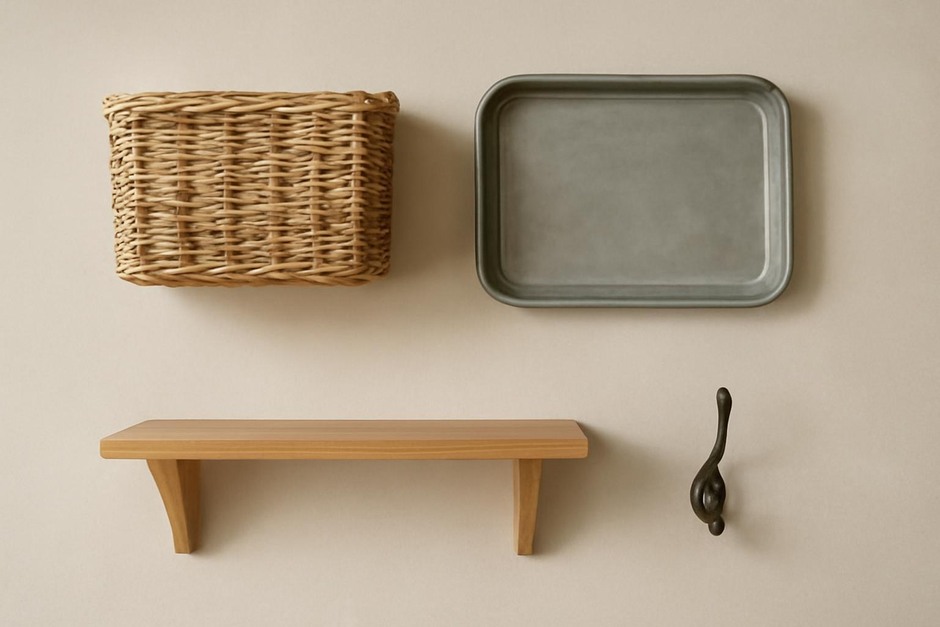
Baskets, Trays, Shelves, or Hooks: What to Use Where for Everyday Stuff
Most homes collect the same sorts of small, everyday items: keys, mail, charging cables, a tossed sweater. The question isn’t whether to store them, but which simple method fits the object, the place, and the habits of the people who live there. Below are four common approaches — baskets, trays, shelves, and hooks — examined by materials and method with practical trade-offs so you can pick the right tool for each corner of your home.
Baskets: flexible containment
Materials and variants: woven natural fibers, plastic, wire, fabric bins, and collapsible canvas. Sizes range from small desk baskets to large laundry hampers.
What they do well
- Quickly corral loose, soft, or irregularly shaped items (scarves, toys, mail piles).
- Hide visual clutter when you want surfaces to look tidy without sorting every object.
- Portable — easy to move between rooms or tuck under a bench.
Trade-offs and considerations
- Natural woven baskets look warm but can shed fibers and are harder to clean if liquids spill. Plastic is waterproof but can seem colder in a living space.
- They encourage a “drop zone” mentality: useful for short-term hiding, less helpful for long-term organization unless paired with routine purging.
- Opacity hides contents, which is good for aesthetics but makes finding small items harder without internal separators.
Trays: defined landing zones
Materials and variants: wood, metal, ceramic, leather, and mirrored trays. Sizes often fit a table, countertop, or dresser top.
What they do well
- Provide a clear, visible boundary — ideal for keys, wallets, sunglasses, and the everyday carry that you want to see at a glance.
- Keep small items grouped and prevent them sliding across counters or tabletops.
- Easy to clean and style; a tray can declutter without hiding items.
Trade-offs and considerations
- Trays require a flat surface and are dependent on the discipline to return items to them; they are not a solution for overflow.
- Material choice affects appearance and maintenance: leather darkens with use, mirrored trays show fingerprints, metal resists spills but may scratch surfaces beneath unless feet or liners are used.
- They work best where visibility is useful — entry tables, bathroom counters, and nightstands — rather than in storage closets.
Shelves: display and ongoing access
Materials and variants: solid wood, plywood, metal brackets and planks, floating shelves, and adjustable shelving systems.
What they do well
- Offer long-term organization for items you access regularly: books, baskets with labeled contents, dishes, and plants.
- Allow vertical use of space, keeping floors and surfaces clear while keeping things visible and reachable.
- Hard materials provide durability and weight capacity unmatched by most portable options.
Trade-offs and considerations
- Installation is less flexible than movable storage; once mounted, shelves are a more permanent commitment. Adjustable systems reduce this drawback but often cost more.
- Open shelves display items openly, so they require more visual editing and consistent styling to avoid a cluttered look.
- Material choices: solid wood feels warm and ages well; metal is sleek and strong but can look industrial. Plywood is economical but may need edge-banding for a finished look.
Hooks: immediate, space-light solutions
Materials and variants: metal single hooks, wooden pegs, adhesive hooks, multi-hook racks, and over-the-door hooks.
What they do well
- Provide instant access for items you want to grab on the way out: coats, bags, hats, keys on a small hook by the door.
- Take up little visual space and make use of vertical wall area often overlooked.
- Low cost and easy to install; adhesive options suit renters and temporary setups.
Trade-offs and considerations
- Hooks expose items, which is fine for a few pieces but looks messy with excess. They encourage hanging rather than storing, so they’re not ideal for many small items unless paired with a small tray or basket beneath.
- Weight limits vary: adhesive hooks have simpler installation but carry less load than screwed-in options.
- Placement matters: a poorly placed hook can snag pathways or block doors; test height and position before permanently fixing one.
Conclusion
Choosing between baskets, trays, shelves, and hooks is less about a single “best” solution and more about matching method to object, place, and habit. Baskets add forgiving containment for soft or irregular items; trays create a visible landing zone; shelves offer durable, ongoing access; hooks give instant reach with minimal footprint. Think about material choices (cleanability, weight, look) and the behavioral trade-offs (visibility vs. concealment, permanence vs. portability). In practice, a combination — a tray for keys, a hook for coats, a shelf for everyday dishes, and a basket for overflow — often balances aesthetics and function with modest effort.
Try one small change in a single spot, notice how it affects daily flow for a week, then adjust the material or method if needed. Small, practical experiments reveal the right mix for your home and routines without large upfront commitments.